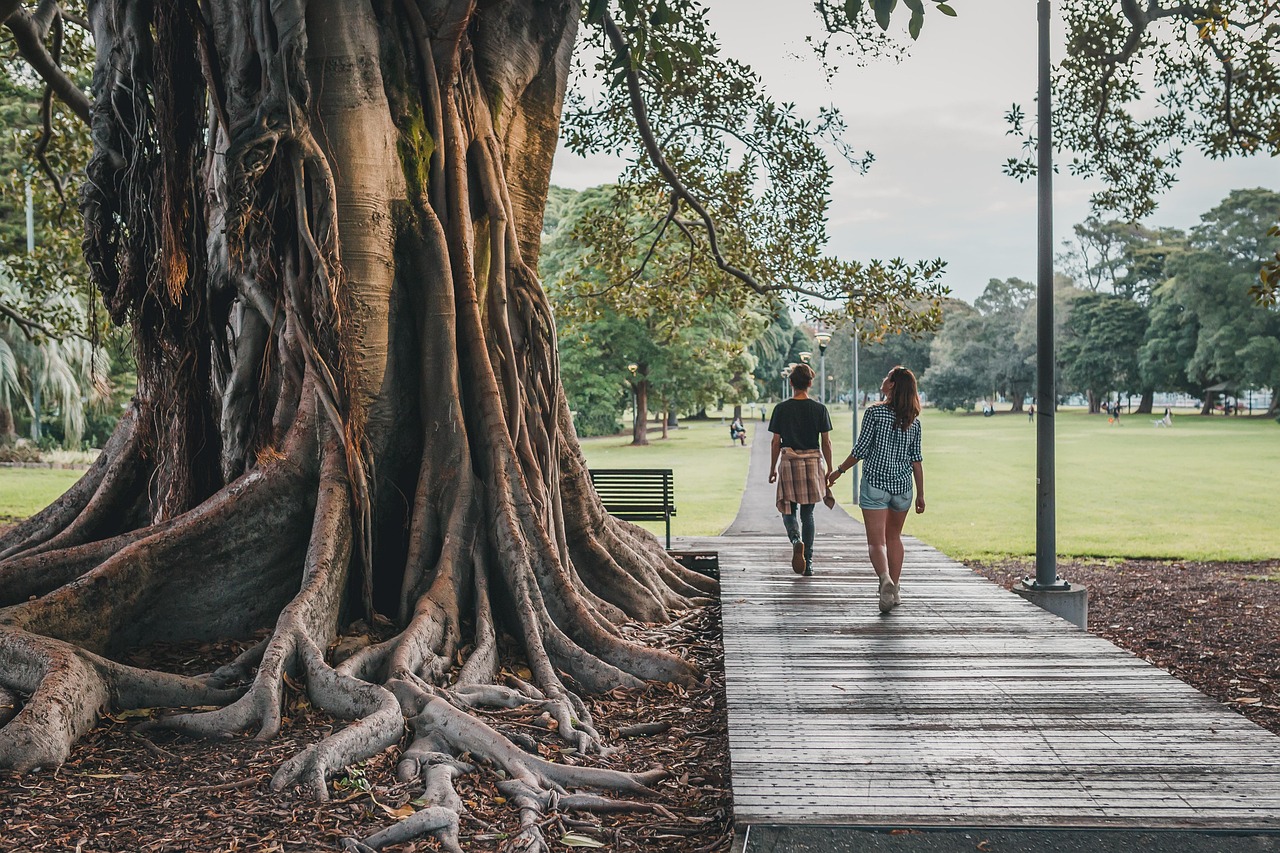
A walking routine can begin somewhere familiar, without a journey to a special starting point. Your first task is to make the outing manageable. Choose a simple route, a likely time and an easy way to return early. This lets you try the walk itself before adding complicated preparations, extra equipment or a distance target.
Choose a route with an easy return Start with a small loop or a path where you can turn back whenever you need to. Look at the surface, crossings and places to pause. If you will be out after dark, consider lighting and visibility. A nearby park may still contain paths that do not suit your needs. Choose a route you understand without having to keep checking your phone.
Give the outing a modest purpose: reach a small square, explore a nearby street or walk part of a familiar path. Treat that destination as an option you can change. If you are simply curious about the neighbourhood, there is no need to add a distance challenge. Notice whether the place and time would work for another walk.
Make getting out the door straightforward Wear familiar footwear and clothing suited to the conditions. If you are carrying a bag, take a few steps with its actual contents before leaving. Check that it does not get in the way. A short local outing does not call for a collection of sporting accessories, but anything you genuinely need should be easy to reach.
Use your phone for directions or time checks when helpful, and put it away when it distracts you from your surroundings. Music is optional. You might prefer conversation or the sounds around you. If you wear headphones, keep yourself able to notice and respond to what is happening nearby.
Let the pace fit the outing Use the first few walks to discover how the route feels. A friend's app results do not set your pace: the weather, path and your circumstances may differ. Leave room for a pause or an earlier return. Turning back before a suggested destination does not erase the outing or prevent another one.
When walking with someone, agree on the purpose before setting off. A relaxed conversation and a brisk walk may be different plans. Choose a pace that suits both the purpose and the participants. Save a different kind of outing for a separately agreed occasion, rather than surprising your companion halfway along the route.
Choose a realistic next opportunity Afterwards, note whether the timing, route and clothing worked. One sentence is enough. If an evening walk keeps losing out to other commitments, try a shorter route earlier in the day. You do not have to fill the calendar immediately; first find an arrangement that fits an ordinary week.
Keep a shorter alternative for days with less time. After several attempts, decide whether you want a different route, company or duration. A routine can grow from an enjoyable outing you are willing to repeat, without reorganising an entire afternoon every time.